Two Markets, One Platform:
Strategic Redesign Under Competitive Pressure
Two Markets, One Platform:
Strategic Redesign Under Competitive Pressure
Two Markets, One Platform:
Strategic Redesign Under Competitive Pressure
January 2025
The Inflection Point
By mid-2023, MiniWorld faced a critical question: what was our platform's future? Danzai Party had captured significant momentum with a clear identity—casual, social, cosmetics-driven. Our user retention was declining in key markets. We were losing direction.
In order to understand what we need to change, I conducted extensive market research.
Market Research: Two Markets, Two Different User Types
I led in-depth user research across our two largest markets: China and Southeast Asia (Vietnam). I interviewed casual players, mid-level creators, and top creators (KOLs). I asked what they valued, how they played, and why.
The findings revealed something critical: our two markets wanted fundamentally different things.
Vietnam: Players approached Mini World as an affordable entertainment experience. They valued high-quality pre-made game content and casual social connection. Most weren't aspiring creators. They chose MiniWorld because it was accessible, cost-effective, and had solid gameplay. Their primary need: engaging game content + easy social play.
China: Players saw Mini World as a creator platform. They wanted to build maps, design cosmetics, and share their creations with friends. Connection was fundamental—they didn't want to create in isolation. They wanted to build communities around their work, find collaborators, and earn money from their creativity. They were frustrated by our weak creator economy, inconsistent UX, and the absence of friend discovery, public chat, and community features that would support community-building. They expected a mature platform for creators.
The Strategic Decision
This insight led to a critical choice: rather than build two separate products for two markets, we decided to build one unified platform with four integrated pillars as shared infrastructure, then weight our investment differently by market in subsequent design phases. These decisions were made jointly with the head of product:
The four pillars:
Game Content — high-quality pre-made experiences
Creator Economy — tools, marketplace, and monetization for map and cosmetic creators
Social Infrastructure — friend discovery, community posting, chat
Monetization & Appearance — shop, customization, cosmetics
Why this approach? Because both markets were weak across all four pillars, and rebuilding twice would be inefficient. By building once with shared infrastructure, we could:
Improve UX to one consistent standard
Reduce development cost (one team + shared modular infrastructure, not two separate teams)
Enable future market-specific tuning without rebuilding from scratch
Market-Specific Investment (Later Phases)
In China, we emphasize creator economy heavily in subsequent design phases. Chinese players wanted to build, share with friends, and monetize. We invested in creator tools, marketplace discovery, and revenue-sharing structures.
In Vietnam, we emphasize game content and casual social features, while maintaining creator economy and monetization as supporting features.
The Execution
Our core users were ages 3–12—children with limited cognitive capacity for new concepts. We were introducing three major new ideas simultaneously: modular components for creators, community posting for discovery, and enhanced monetization. If we weren't careful, users would see it as a completely new game and abandon it.
So we made a deliberate choice: build all four pillars coherently, but introduce concepts simply and gradually.
We enriched our game content library and redesigned the onboarding and quest systems, giving young players a clear sense of direction and making it easier to get started from day one.
Pillar 2 : Creator Economy
We made two specific moves to lower barriers and expand who could participate.
We made two specific moves to lower barriers and expand who could participate.
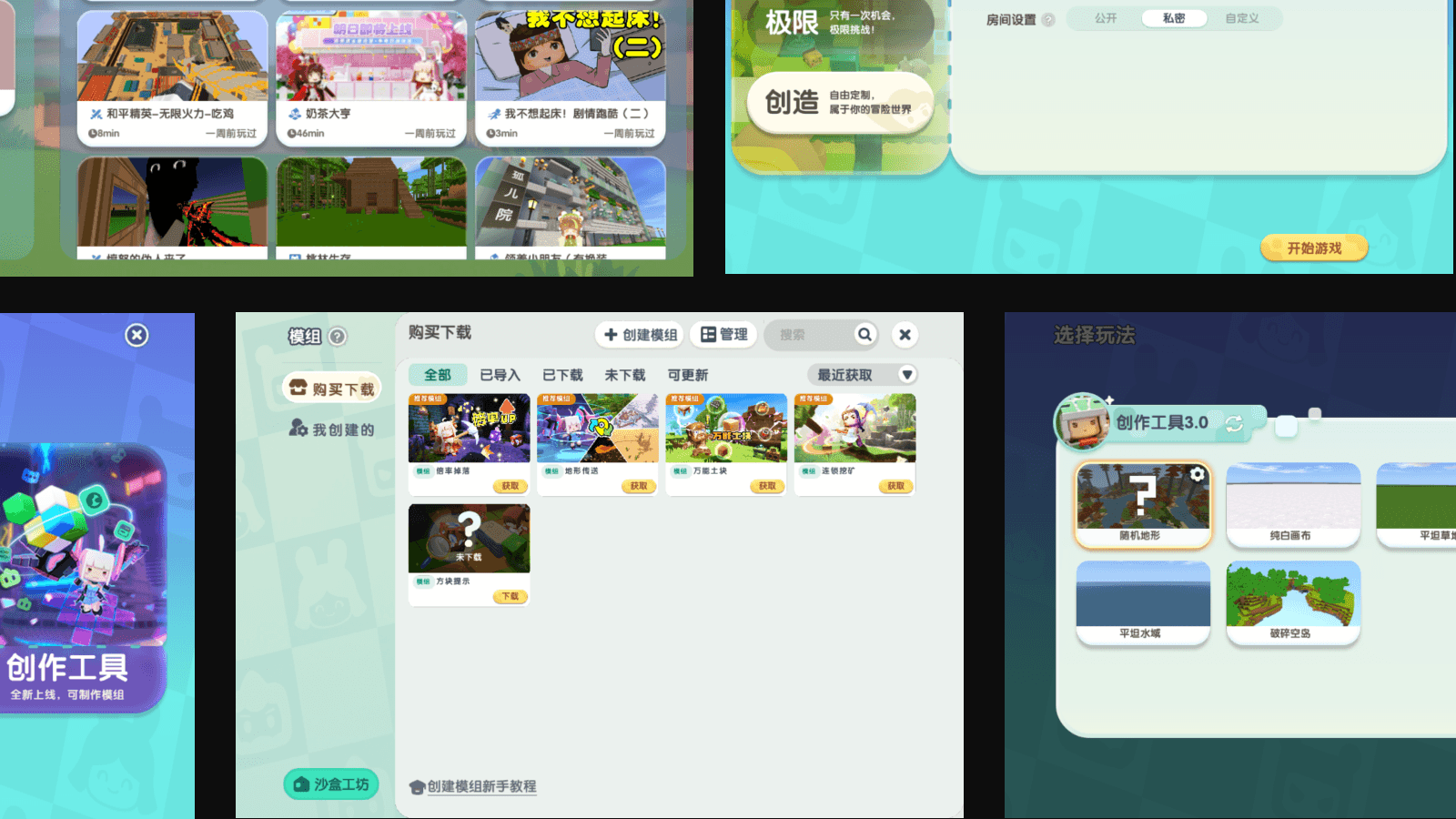
Historically, creators had to build and monetize whole maps. We introduced a system where creators could build and sell individual components—buildings, assets, decorative pieces. Simultaneously, players could purchase and assemble components rather than consuming finished maps. This lowered the barrier for both creators and players.
We provided design templates so new creators didn't face a blank canvas. Rather than building from nothing, they had a foundation to customize and extend. This removed the intimidation factor and let more people participate.
Pillar 3: Social Infrastructure
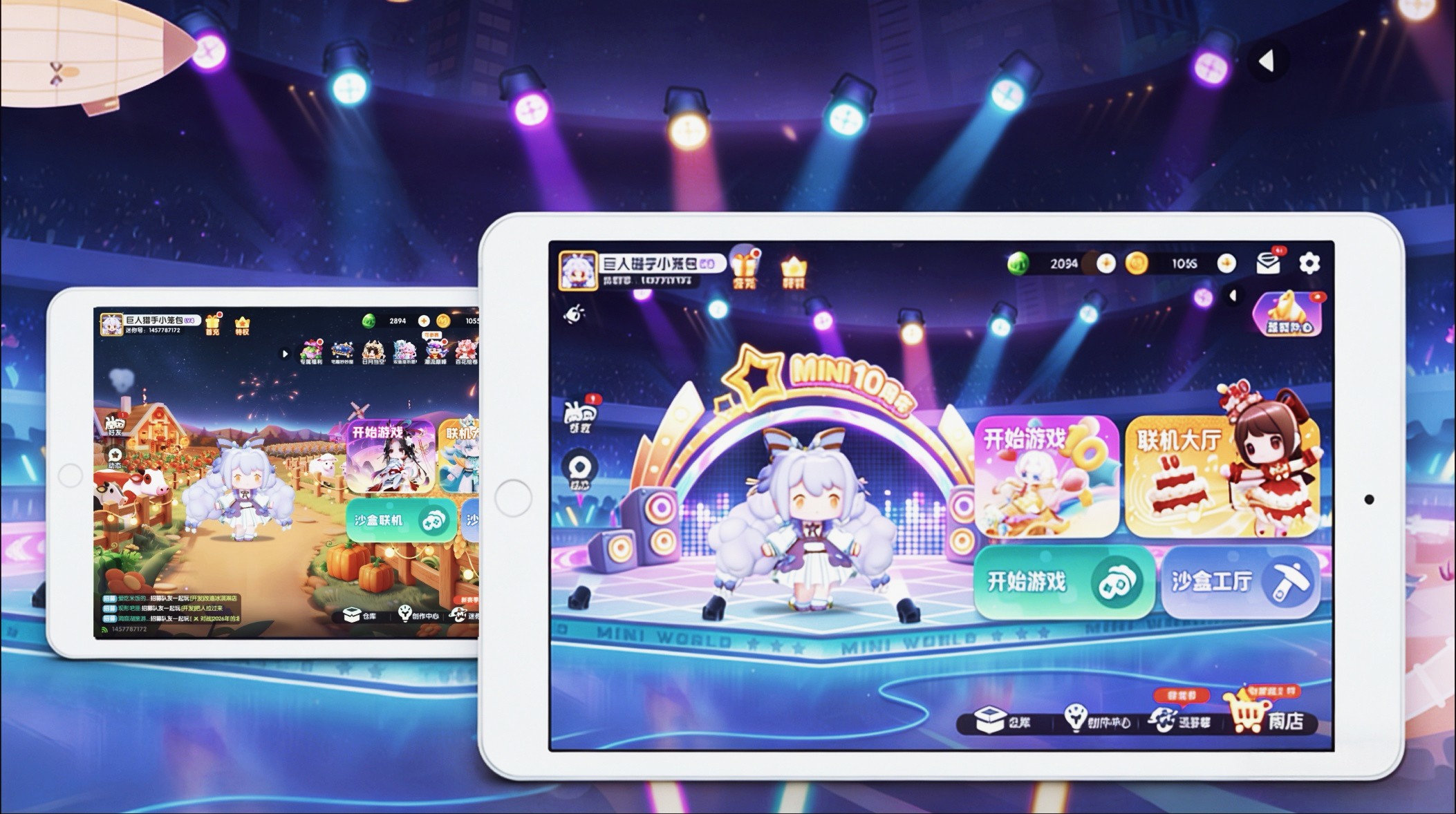
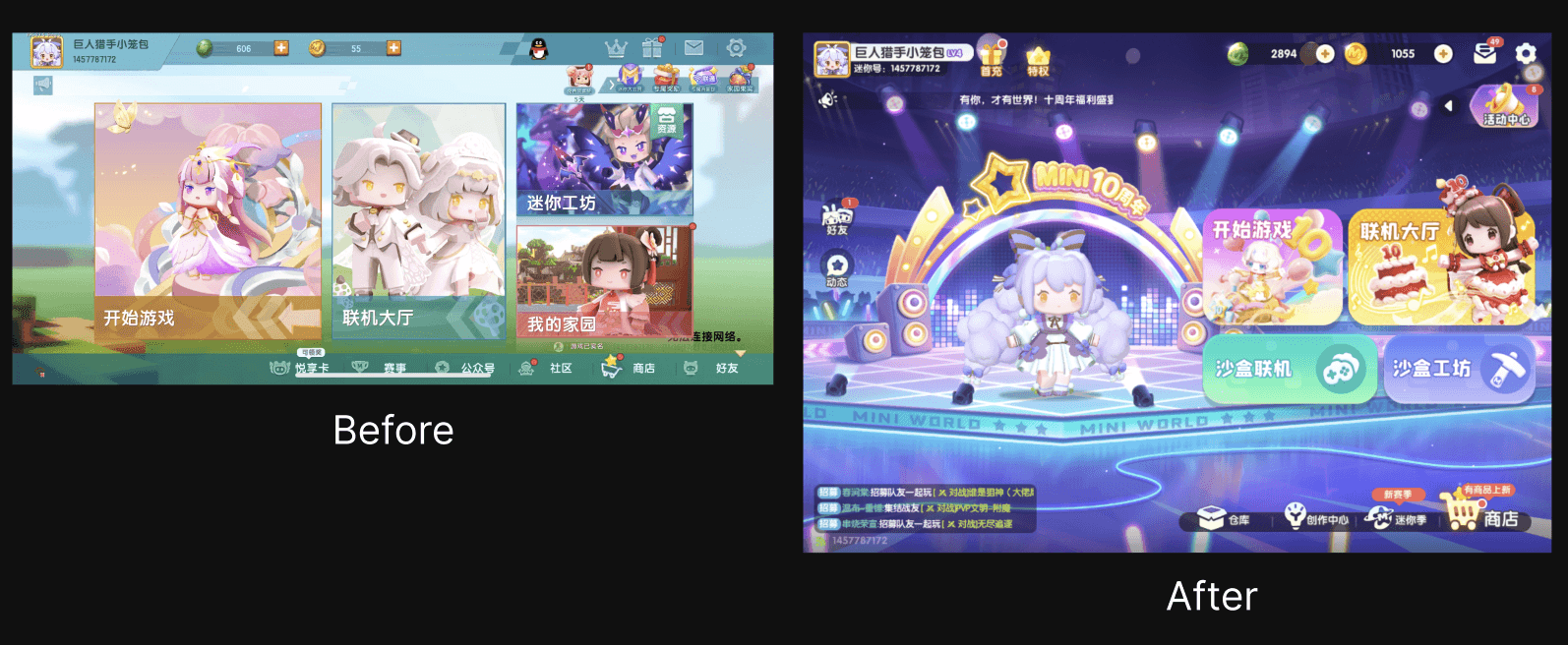
We redesigned the social experience, which was fragmented and clunky. I added new entry points for friend activity, public chat channels, and community posts directly on the homepage. We also made player appearance a prominent showcase — giving players pride and recognition around their avatar. This strengthened identity and gave players a reason to invest in self-expression.
Pillar 4: Monetization & Appearance
Pillar 4: Monetization & Appearance
We redesigned the shop and appearance systems: added wishlists and simplified purchase flows, introduced component-based customization so players could mix and match rather than buy whole skins, improved appearance preview, and streamlined checkout.
Leadership
As the head of Product Experience, I coordinated across nearly 60 stakeholders from product, commercialization, game content, and growth teams. I also led the design system initiative—the system provided cross-page consistency and delivery efficiency, critical for shipping at this scope without chaos.
We launched in October 2023, rolling out across multiple versions. We tested with users constantly, simplifying when concepts felt confusing, iterating when adoption was slow.
Results
Social engagement increased 30%
Creator sign-ups increased; mid-level creator activity rose
Shop conversion improved due to reduced friction
Most importantly: user retention stabilized. We stopped losing users and began growing steadily.